Thunder Laser in Truxton Extreme
Lock-on sustained damage — connect once, keep pressure while dodging, and know when laser beats beam.
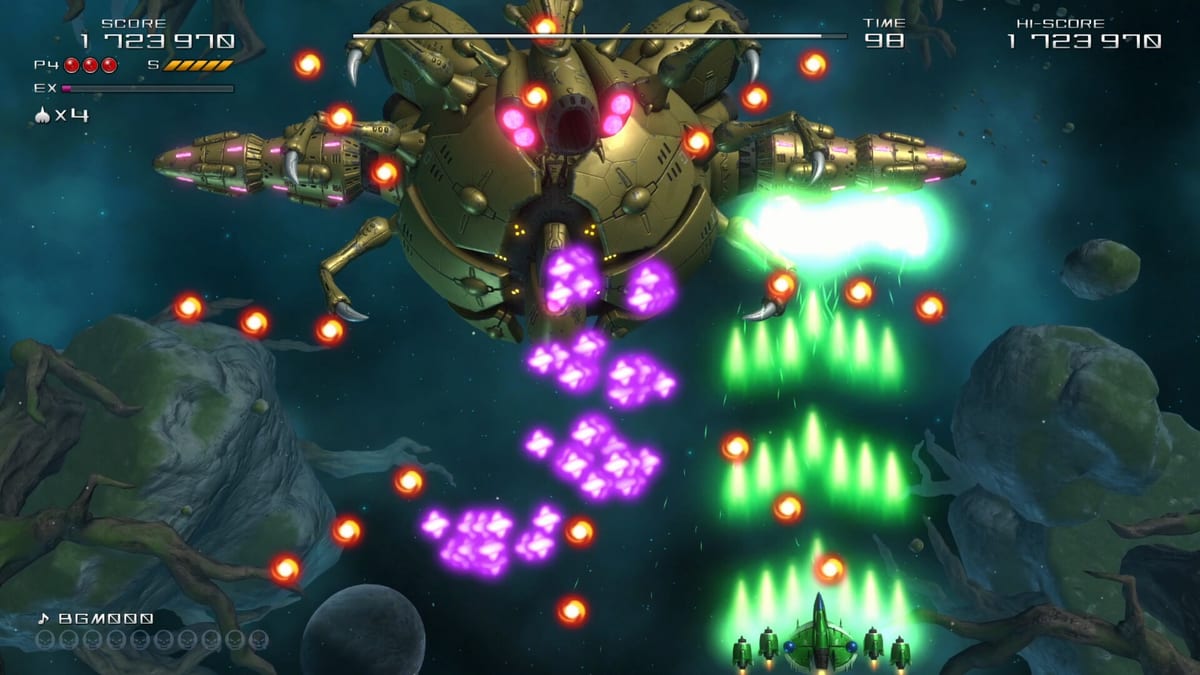
The Thunder Laser fires a laser shot that locks on when it hits an enemy, sustaining damage on that target while you focus on dodging and repositioning. In Truxton Extreme, Tatsujin’s vertical 3D shooter published July 30, 2026 on PS5, Xbox Series, Switch 2, Steam, and GOG, Thunder Laser occupies the middle ground between manual Tatsujin Beam lines and fully autonomous Homing Shot tracking. It rewards an initial connection, then pays off with consistent pressure — if you understand what breaks lock and when to re-establish it.
Players comparing laser to beam should read both guides and test in Training mode on the same boss segment. Subjective feel varies with display lag, controller dead zone, and how aggressively you use manual speed boost from the controls page.
Lock-on mechanics in practice
Thunder Laser requires your shot to contact a valid target before lock engages. Until connection, it behaves like a forward laser you must aim. After lock, damage continues while line-of-sight and target validity rules remain satisfied — typical shmup lock behavior adapted to Truxton Extreme’s 3D bullet patterns.
Lock does not replace movement. Bullet curtains still demand dodges; laser’s advantage is maintaining DPS during dodges that would break a manual beam line. When targets die quickly or leave the lock window, you must acquire a new connection — plan re-acquisition during calm pattern beats.
Strengths
Boss phases. Mid-boss parts that stay on screen while emitting dense patterns are laser’s home turf. Connect during a brief safe window, then dodge while damage ticks — a core skill for Arcade and late Story episodes.
Bullet-dense corridors. When movement is constrained, laser often outperforms beam because micro-dodges do not zero your effective DPS as harshly once lock is active.
Learning bridge. Players graduating from Power Shot but not ready for pure beam positioning often stabilize runs with laser first.
EX Shot pairing. EX Shot during active lock multiplies pressure on the tethered target — excellent when a boss opens vulnerability while adds spawn; clear adds first if they break lock priority.
Weaknesses
Initial acquisition risk. Connecting safely may require entering a hot zone. Mis-timed attempts trade life for lock setup.
Multi-target stages. One lock means one priority target. Wide popcorn waves may favor Power Shot or Homing unless a single elite enemy justifies focus fire.
Partner overlap in co-op. Two laser players may compete for the same lock target in Team mode. Split roles: one laser on boss, one wide or homing on adds — see How to play co-op.
When Thunder Laser beats Tatsujin Beam
Choose laser when you must move during damage phases and cannot hold a static pierce line. Choose beam when the stage gives you a long straight corridor with minimal lateral dodging and stacked pierce value.
On the weapon tier list, laser shares S tier with beam in Arcade for these reasons — pick based on pattern type, not badge rank alone.
Switch to Star-Mine Shot before rooms where enemies clump and die faster from explosions than sustained single-target lock. Switch to Homing Shot when targets are too numerous and none live long enough to repay lock setup time.
Bomb and defensive timing
Thunder Laser does not clear bullets. Reserve Bomb uses for moments when you must connect lock during an otherwise unfair pattern, or when lock breaks at the worst time and you need a reset window.
In Heart Starter, practice lock breaks intentionally — learn how long re-acquisition takes so Arcade deaths do not surprise you.
Arena and score considerations
Arena two-minute runs favor weapons that handle scattered popcorn under timer pressure. Laser sits A tier: strong when a high-value cluster remains centered, weaker when targets spread thin. If Arena stages rotate heavy center blobs, laser competes with S-tier picks; if they spawn edge-heavy, lean Homing or Power.
Routing checklist
- Identify the priority target before entering the room.
- Connect during the safest sub-pattern, not the first visible frame.
- Dodge while monitoring lock icon or visual tether — re-acquire during lulls.
- Fire EX when lock is stable on a high-HP target, not during setup.
- Switch weapons at capsules if the next room lacks a lock-worthy priority.
Use the weapon picker tool for mode-specific suggestions, and return to the Weapons hub for the full capsule system overview.
Advanced notes
Laser players benefit from audio cues — many patterns telegraph safe connect windows before visual clarity. Pair laser practice with How to Play guidance on reading bullet colors and speed tiers.
Do not chase lock on low-value fodder during boss fights; killing adds with a quick wide weapon switch or partner coverage preserves laser uptime on the real target.
Frequently Asked Questions
Quick answers to the most common questions.
How does Thunder Laser lock on?
The laser connects when your shot hits an enemy, then maintains focused damage on that target while lock conditions remain valid. You still need to dodge incoming fire during the lock.
Can lock break if I move too far?
Lock breaks when target validity ends — enemy death, phase transition, or line-of-sight interruption depending on the encounter. Re-acquire during calmer pattern beats.
Is Thunder Laser good for beginners?
It is a strong step-up from Power Shot for players who understand dodging but struggle to hold beam lines. Heart Starter remains the best place to learn without losing full credits.
Thunder Laser vs Homing Shot — which tracks better?
Homing distributes multiple tracking bullets across several targets. Thunder Laser focuses sustained damage on one locked target. Pick Homing for scattered popcorn; pick laser for single high-HP priorities.
Does EX Shot extend lock duration?
EX Shot increases offensive output during its window; it does not change lock rules. Activate when lock is already stable on a valuable target.