Truxton Extreme Arcade Mode — Classic Sequential Stage Climbing
No manga interludes, no episode gates — just stage order, lives, bombs, and the pursuit of a one-credit clear.
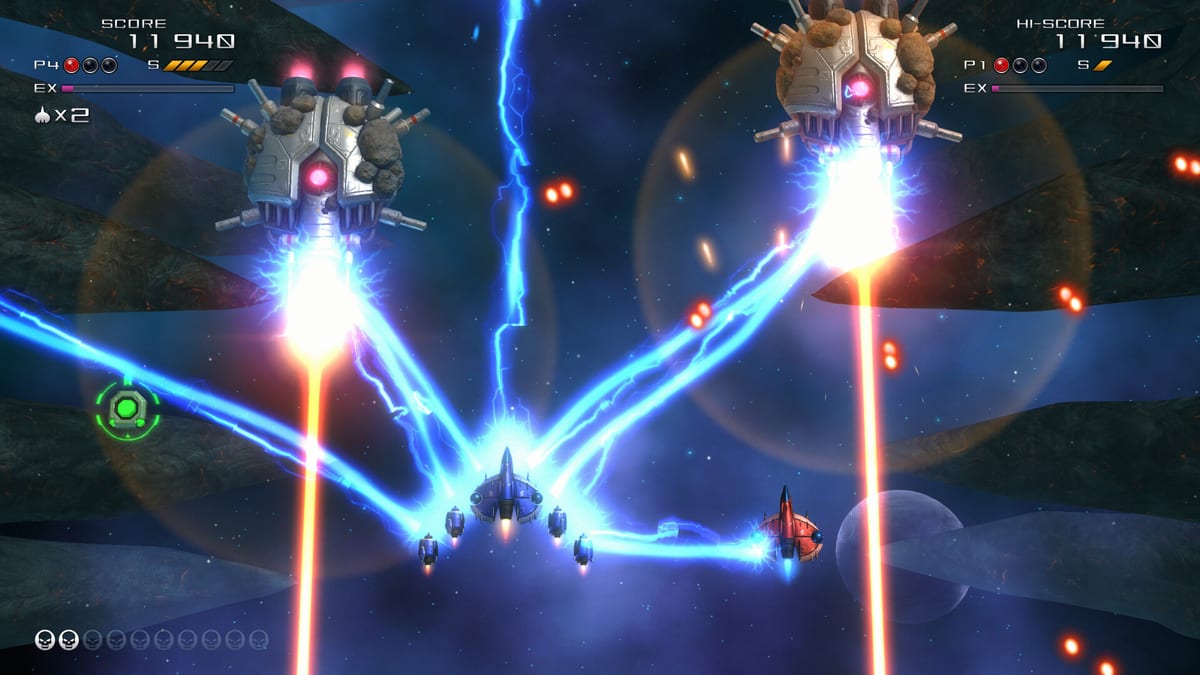
Arcade Mode is Truxton Extreme stripped to the chassis. Tatsujin removes story interludes, episode unlock gates, and narrative pacing cues, then asks you to climb stages in strict sequential order the way genre veterans expect from a cabinet-era vertical shooter. If Story Mode is the guided campaign, Arcade is the exam hall.
Arcade unlocks after you complete your first Story mission on a fresh save. That requirement ensures you have seen the six-stage mission skeleton, basic bomb economy, and first boss patterns before the game trusts you with uninterrupted scoring pressure. Once open, Arcade becomes the default home for players chasing one-credit clears, leaderboard submissions, and muscle-memory routing without comic downtime.
How Arcade differs from Story
The enemy roster, ship stats, and weapon systems match Story — see the weapons guide for loadout specifics — but the presentation layer changes completely:
- No manga cutscenes between missions. Stage transitions are fast fades with minimal text.
- Sequential stage order without episode selection menus tied to character arcs.
- 1CC mindset encouraged: continues may exist on some platforms, but community scoring treats uninterrupted clears as the real achievement.
- No character episode gating — you pick your ship and climb until you run out of lives or complete the route.
Arcade assumes you already know why stage three mini-bosses appear and how stage six enrage phases behave from Story exposure. Jumping into Arcade cold is possible after unlock, but most players fail early without that Story foundation.
Stage flow and difficulty curve
Arcade presents stages in a fixed chain. Each stage follows the same design language Story teaches — opening pressure, mid-field escorts, mini-boss gate, corridor breather, climax formation, stage boss — but without narrative pauses you can mentally reset during. The difficulty curve feels steeper in Arcade because there is no comic interlude between stage six and the next mission’s stage one; you roll directly into fresh enemy density while still carrying mental fatigue from the prior boss.
Enemy bullet speed and spawn counts align with late Story difficulty on repeat clears. First-time Arcade entrants should expect stage four and five to punish greedy grazing unless weapon levels were managed on stage two and three.
Scoring and extends
Arcade scoring rewards chain kills, item collection, and graze points without Story-specific objective bonuses. Extends — if enabled on your platform — typically trigger at fixed score thresholds. Those extends interact with Arena training: players who grind two-minute bursts in Arena often return to Arcade with sharper stage-one openings that snowball score across the full chain.
Because Arcade lacks Heart Starter’s hit forgiveness, every contact costs a life unless you are practicing elsewhere first. Use Heart Starter to learn a new stage segment, then port the route into Arcade for real scoring.
1CC strategy overview
A one-credit clear in Arcade requires three pillars: route knowledge, bomb discipline, and weapon level timing.
Route knowledge: Memorize safe lanes on stage five climax formations before attempting full chains. One death before stage four mini-boss usually ends 1CC hopes because weapon level drops cascade into under-damaged bosses.
Bomb discipline: Bomb on guaranteed damage frames — mid-boss enrage, boss phase transitions — not on readable patterns you should dodge. Arcade runs are long; two wasted bombs on stage three leave you exposed on stage six.
Weapon timing: Prioritize main weapon caps on stages with dense small enemies. Sub weapon choice should match the next boss’s weak phase — details vary by ship and are documented under weapons.
Unlock path and prerequisites
Arcade is not available on boot. The standard unlock flow:
- Complete the Tutorial if you have not already.
- Clear your first Story Mode mission.
- Arcade appears on the title screen mode list.
If Arcade remains locked, verify Story mission completion registered — some platforms require returning to the title screen before new modes appear. The unlock checklist tool tracks common gates; the how to unlock modes guide covers troubleshooting.
Arcade vs Arena and Training
Arena Mode compresses action into a two-minute score attack with different pacing goals. Training Mode loops isolated sections with speed controls. Arcade sits between them: full stage length like Story, but without narrative structure.
Players often unlock Arena and Training near 300,000 points on Story stage one — independent of Arcade unlock. That means you might have Arena open before you emotionally commit to Arcade 1CC attempts. Use Arena for burst scoring practice and Arcade for endurance proof.
Co-op and side modes
Arcade is primarily a solo endurance mode. Team Mode handles two-player shared-life co-op with rescue mechanics — a different contract than Arcade’s solitary climb. Pipiruville rescue progress still accumulates from enemy defeats during Arcade sorties, so completionists need not abandon Arcade for side content.
Model Viewer synergy
When Arcade wall runs stall on a unfamiliar boss, defeat that boss at least once in any mode to unlock its model in the Model Viewer. Studying attack arcs offline beats repeated credit feeding on stage six.
Who should play Arcade?
Choose Arcade if you want classic sequential stage pressure, leaderboard credibility, and zero cutscene downtime. Stay in Story Mode if you still need episode unlocks or character manga context. Warm up in Heart Starter when learning new patterns, then prove the route in Arcade when you are ready to stake lives on every pixel.
Frequently Asked Questions
Quick answers to the most common questions.
How do I unlock Arcade Mode?
Complete your first Story mission. Arcade then appears on the mode select screen. If it does not show, return to the title screen and confirm the Story clear registered on your save.
Does Arcade Mode have story cutscenes?
No. Arcade removes manga interludes and episode framing. You play sequential stages with minimal transition text, focused on survival and scoring.
Is Arcade harder than Story Mode?
Enemy patterns align with late Story difficulty, but Arcade feels harder because there are no narrative breaks between stages and no Heart Starter hit forgiveness unless you play that separate mode.
Can I earn Pipiruville progress in Arcade?
Yes. Defeating enemies during Arcade runs contributes to Pipiru rescue counts tracked in Pipiruville. Arcade is valid for side progression.
What is the difference between Arcade and Arena?
Arcade is a full sequential stage climb like classic shooters. Arena is a fixed two-minute score attack with compressed pacing and different scoring incentives.