Every Truxton Extreme Game Mode Explained
Story chapters, score attacks, co-op sorties, and the Pipiruville side mode — pick the right route for your skill level.
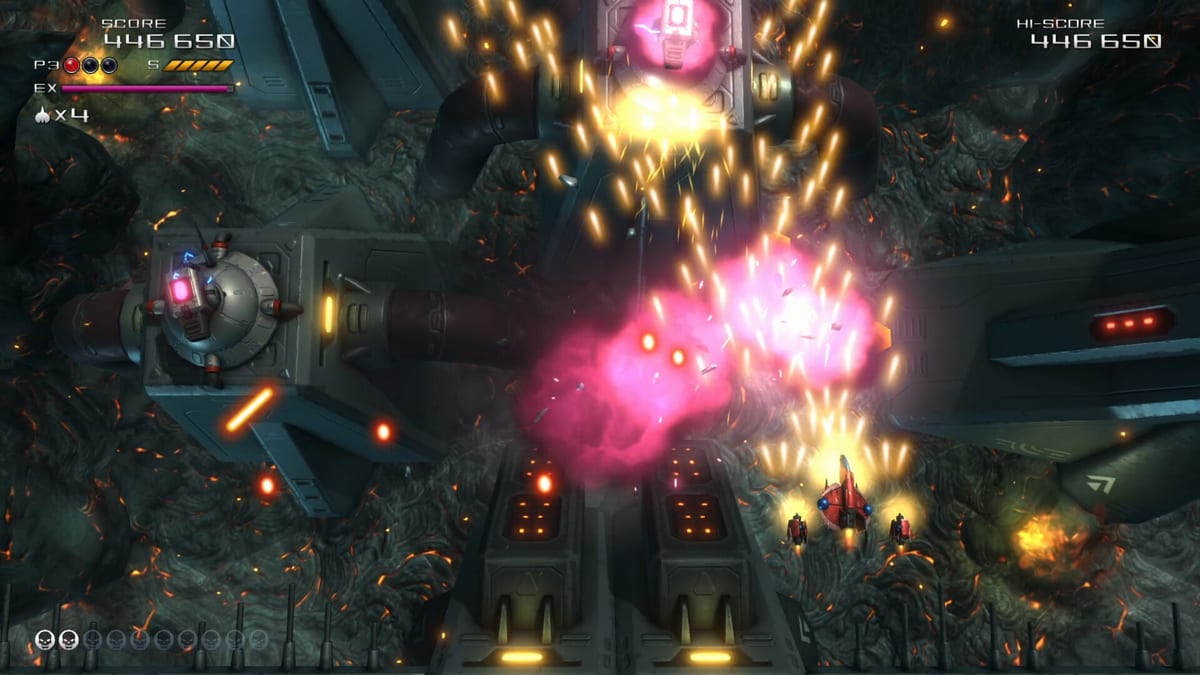
Truxton Extreme is not a single difficulty slider disguised as a shooter. Tatsujin built a full menu of modes that share the same weapons, ships, and enemy roster but change pacing, stakes, and what you are trying to prove. Whether you want manga-backed story episodes, a classic one-credit arcade run, or a two-player rescue mission with shared lives, the mode you select shapes the entire session before you leave the hangar.
This hub maps every major option on the title screen, explains how they connect, and points you to focused guides when you need step-by-step unlock help or co-op positioning tips.
Story — the narrative backbone
Story Mode is the main campaign. Animated manga panels by Junya Inoue frame each mission, and you follow three pilots — Ash Ricardo, Bergamot Demuro, and Cyrilla — through escalating six-stage sorties. Clearing stages unlocks new story episodes and lets you experience the same mission structure from different character perspectives with rising difficulty. If you care about lore, character voice, or structured progression, start here.
Arcade — pure sequential pressure
Once you finish your first Story mission, Arcade Mode opens for players who want a traditional stage-by-stage climb with no cutscenes. There is no narrative padding between waves; the game expects you to chain stages, manage bombs, and chase a one-credit clear mindset. Arcade is the mode to pick when you already know enemy patterns and want uninterrupted scoring flow.
Heart Starter — learn without losing a life
Heart Starter is available from the beginning and acts as the on-ramp. Hits temporarily disable your ship, then recovery kicks in after a few seconds without costing a life. That forgiveness makes it ideal for learning bullet patterns, testing weapon routes, and practicing bomb timing before you commit to Arcade or high-score Arena attempts.
Team — local two-player co-op
Team Mode supports split-screen co-op with shared lives, bombs, and score. Downed partners can be rescued by touching them while carrying a bomb, and experienced duos can redirect enemy fire using ship frame positioning. Read our co-op guide for rescue timing and shared-resource etiquette before you invite a second pilot.
Arena — two-minute score attack
Arena Mode compresses the action into a fixed two-minute score attack. Enemy density and point values favor aggressive grazing and fast weapon upgrades rather than survival marathon play. It unlocks alongside Training for many players after hitting roughly 300,000 points on the first Story stage — details vary by platform, so cross-check the unlock checklist if your menu looks different.
Training — controlled practice loops
Training Mode strips away stage progression and lets you loop specific sections, swap shot types, and adjust simulation speed. Use it to rehearse boss openings, compare main and sub weapon DPS, or warm up before an Arena push. Training shares the same unlock gate as Arena in community reports.
Pipiruville — rescue meta on the side
Pipiruville is a parallel progression track where you rescue Pipiru aliens during combat, unlock their village hub, and invest in village development between sorties. It rewards consistent enemy clears across modes rather than a single perfect run, and it gives completionists a long-tail goal after the main story arc.
Tutorial, Model Viewer, and unlock order
A dedicated Tutorial walks new pilots through movement, shooting, and bomb basics before you touch serious scoring. The Model Viewer catalogues defeated enemies for study — useful when a stage introduces a new mid-boss silhouette. For a consolidated unlock timeline — Heart Starter at boot, Arcade after the first Story mission, Arena and Training near 300k on stage one — see the Unlocks guide and the how to unlock modes walkthrough.
Which mode should you play first?
| Goal | Recommended mode |
|---|---|
| Learn patterns safely | Heart Starter |
| Experience story and characters | Story |
| Chase 1CC or high scores | Arcade |
| Play with a friend | Team |
| Short burst scoring | Arena |
| Drill one section | Training |
| Long-term collection | Pipiruville |
Most players benefit from a Heart Starter warm-up, a Story mission to unlock Arcade, then branching into Arena or Team depending on whether they prefer solo score chasing or co-op rescue play. Revisit this hub whenever a new patch adds balance tweaks — mode rules stay stable, but unlock thresholds and scoring tables occasionally shift after updates.
Frequently Asked Questions
Quick answers to the most common questions.
How many game modes does Truxton Extreme have?
The title screen includes Story, Arcade, Heart Starter, Team, Arena, Training, and Pipiruville, plus Tutorial and Model Viewer utilities. Story and Arcade cover campaign and classic sequential play; the others specialize in difficulty, co-op, scoring, practice, and side progression.
Do all modes share the same ships and weapons?
Yes. Your ship roster, shot types, and bomb rules carry across Story, Arcade, Heart Starter, Team, Arena, and Training. Pipiruville uses rescue progress from combat sorties but does not replace core weapon systems — see the weapons hub for loadout details.
Which mode is best for beginners?
Start with the Tutorial, then Heart Starter for forgiving hit recovery. Move into Story Mode once you can clear early waves without relying on infinite continues elsewhere.
Can I play co-op in every mode?
Local two-player co-op is built for Team Mode. Other modes are primarily single-player experiences on console and PC, though some platforms may allow a second controller as support — check the co-op guide for platform-specific notes.
Where do I find unlock requirements for each mode?
Heart Starter is available immediately; Arcade opens after your first Story mission; Arena and Training commonly appear near 300,000 points on the opening Story stage. The dedicated Unlocks page and unlock walkthrough list community-verified thresholds.